





The Tugo Method
Why we structure lessons around cognitive science, not what feels easy
“The Tugo Method” is simply what we call our approach to lesson structure. It's based on cognitive science research about how students actually learn and retain information.

Why most tutoring doesn't stick
Traditional tutoring often feels productive in the moment. The student gets the answers right, and everyone goes home happy. But a week later? They've forgotten most of it.
This is because most tutoring optimises for performance: how well the student does during the session, rather than learning: how much they'll remember long-term.
The uncomfortable truth: fluency in the moment is often an illusion of competence. Real learning feels harder. It involves struggle, forgetting, and effortful retrieval.
The research behind our approach
Desirable difficulties
Robert & Elizabeth Bjork, UCLA Learning and Forgetting Lab
Robert and Elizabeth Bjork's research reveals a counterintuitive truth: learning and remembering are enhanced by forgetting.
Their work on "desirable difficulties" shows that conditions which slow down performance during learning (like spacing, interleaving, and effortful retrieval) actually strengthen long-term retention.
“Conditions that create challenges for the learner, slowing the rate of apparent learning, often optimise long-term retention and transfer.”
Why minimal guidance doesn't work
Kirschner, Sweller & Clark, 2006
This landmark paper analysed decades of research on discovery-based, problem-based, and inquiry-based teaching methods. The conclusion was clear: fully guided instruction is significantly more effective than leaving students to discover concepts alone.
For novice learners, worked examples and explicit instruction consistently outperform approaches that ask students to "figure it out" on their own.
“Controlled experiments almost uniformly indicate that when dealing with novel information, learners should be explicitly shown what to do and how to do it.”
How we apply this in practice
Spaced Repetition
We revisit concepts at optimal intervals, using forgetting as a tool for stronger encoding.
Interleaving
Mixing problem types builds flexible thinking and prevents the illusion of competence.
Worked Examples
New concepts are taught through expert-modelled examples, not left to discovery.
Effortful Retrieval
Students practice recalling information without cues: the struggle strengthens memory.
What this looks like in a lesson
Here's how we structure a typical 1-hour session. The principles apply to any subject or year group.
Spaced Retrieval Warm-Up
5–7 mins
Purpose
Get memory retrieval firing, reinforce old learning, diagnose gaps.
How it works
High challenge, short, fast, cumulative.
Examples
- •"Without notes: write down the quadratic formula."
- •"Last lesson we covered circle theorems. Name three of them."
- •"I'll show you a simultaneous equation for 5 seconds. Tell me which method you'd use to solve it."
Why it works (the science)
Effortful recall strengthens storage, even before new learning begins.
Interleaved Micro-Tasks
10 mins
Purpose
Immediately disrupt the brain's expectation of blocks.
How it works
Mix 3 unrelated problem types, never in sets: 1 of each, rotating unpredictably.
Examples
- •One quadratic factorisation question
- •One trigonometry question (finding an angle)
- •One algebraic fraction simplification
- •Back to a harder quadratic (requiring the formula)
- •Switch again
Why it works (the science)
Interference + forgetting between repetitions = better discrimination + stronger learning. Performance looks slightly worse, which is a desirable difficulty.
New Concept via Worked Examples
10–12 mins
Purpose
Introduce new topics through expert-modelled examples, then guided practice.
How it works
Show the complete solution process step-by-step before asking students to attempt similar problems.
Examples
- •Tutor works through completing the square on x² + 6x + 5, explaining each step aloud
- •Student observes and asks clarifying questions
- •Tutor presents a similar problem (x² + 8x + 12) for guided practice
- •Student attempts with scaffolding, tutor corrects in real-time
Why it works (the science)
Research by Kirschner, Sweller & Clark shows that worked examples reduce cognitive load and are far more effective than discovery-based approaches for novice learners.
Desirable Difficulty Cycle
15–20 mins
Purpose
The backbone of the session: productive struggle with interleaving.
How it works
Student attempts → Tutor waits silently → Student struggles productively (40–80% success ideal) → Precise feedback → Change topic → Return later.
Examples
- •2 completing the square questions
- •Switch: 1 Pythagoras problem
- •Return: 1 harder completing the square (coefficient > 1)
- •Switch again: 1 probability question
- •Return again: completing the square word problem
Why it works (the science)
Constant forgetting → effortful retrieval. Mixed contexts → encoding variability. Difficulty → strong storage gains. If they look smooth, it's too easy.
Challenge Spike
5 mins
Purpose
One deliberately hard problem requiring multi-step reasoning.
How it works
Should feel difficult, borderline too hard, but solvable with thinking time.
Examples
- •"A cone has volume 150π cm³. The radius is (x + 2) cm and the height is 3x cm. Form and solve an equation to find x, then find the exact surface area."
Why it works (the science)
With effortful struggle, retrieval + reasoning get strengthened. Builds cognitive resilience.
Metacognition Check-in
3–4 mins
Purpose
Students must understand why things feel hard.
How it works
Guide them toward understanding desirable difficulties and differentiating fluency from learning.
Examples
- •"Which questions felt hardest today? Why do you think that is?"
- •"What did you notice when I brought the completing the square questions back after the break?"
- •"Did you learn more from the easy parts or the hard parts?"
Why it works (the science)
Metacognitive awareness helps students recognise what will stick long-term and builds learning autonomy.
End-of-Session Retrieval Test
3–5 mins
Purpose
Short but high-impact final retrieval.
How it works
Ask them to retrieve the new concept with no cues.
Examples
- •"Without looking: talk me through how to complete the square on any quadratic."
- •"When would you use completing the square instead of factorising?"
- •"What was the trickiest thing today? Tell me the steps you'd take next time."
Why it works (the science)
Retrieval at the end of a session dopamine-tags the memory for long-term retention. It creates the 'desirable difficulty spacing effect' within a single hour.
Future-Spaced Plan
1 min
Purpose
Set expectations for spaced practice.
How it works
End with a promise to revisit: reinforces that forgetting is part of learning.
Examples
- •"Next time I'll surprise you with a completing the square question. Be ready to explain the method again: your brain will have forgotten a bit, and that's good."
Why it works (the science)
This reinforces spacing, expectation of forgetting, and the idea that forgetting = learning opportunity.
A Note on "Productive Struggle"
In a Tugo session, your child might occasionally look like they're struggling. That's intentional. Research shows that the feeling of difficulty during learning is often inversely correlated with how much is being retained.
Do not chase high fluency in the moment. If everything looks smooth and easy, it's probably too easy. Struggle → learning. Fluency → illusion of competence.
Does it work?
Students taught with this approach don't just perform better in sessions: they retain more and build understanding that lasts beyond the lesson.
On average, students advance 6 months per school year of tutoring with us. We've maintained a 5-star rating on Trustpilot from parents who've seen the difference.
About the authors

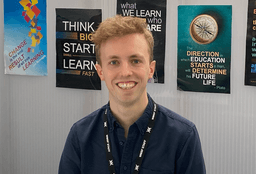
PGCE-qualified teacher with six years in the classroom, including at Harrow International School. Designed the Tugo Method to bring evidence-based teaching to tutoring.

Maths tutor of five years and a primary school governor. Built an AI tutor first, and learned students need a human to improve.
Ready to put the science into practice?
Book your free lesson